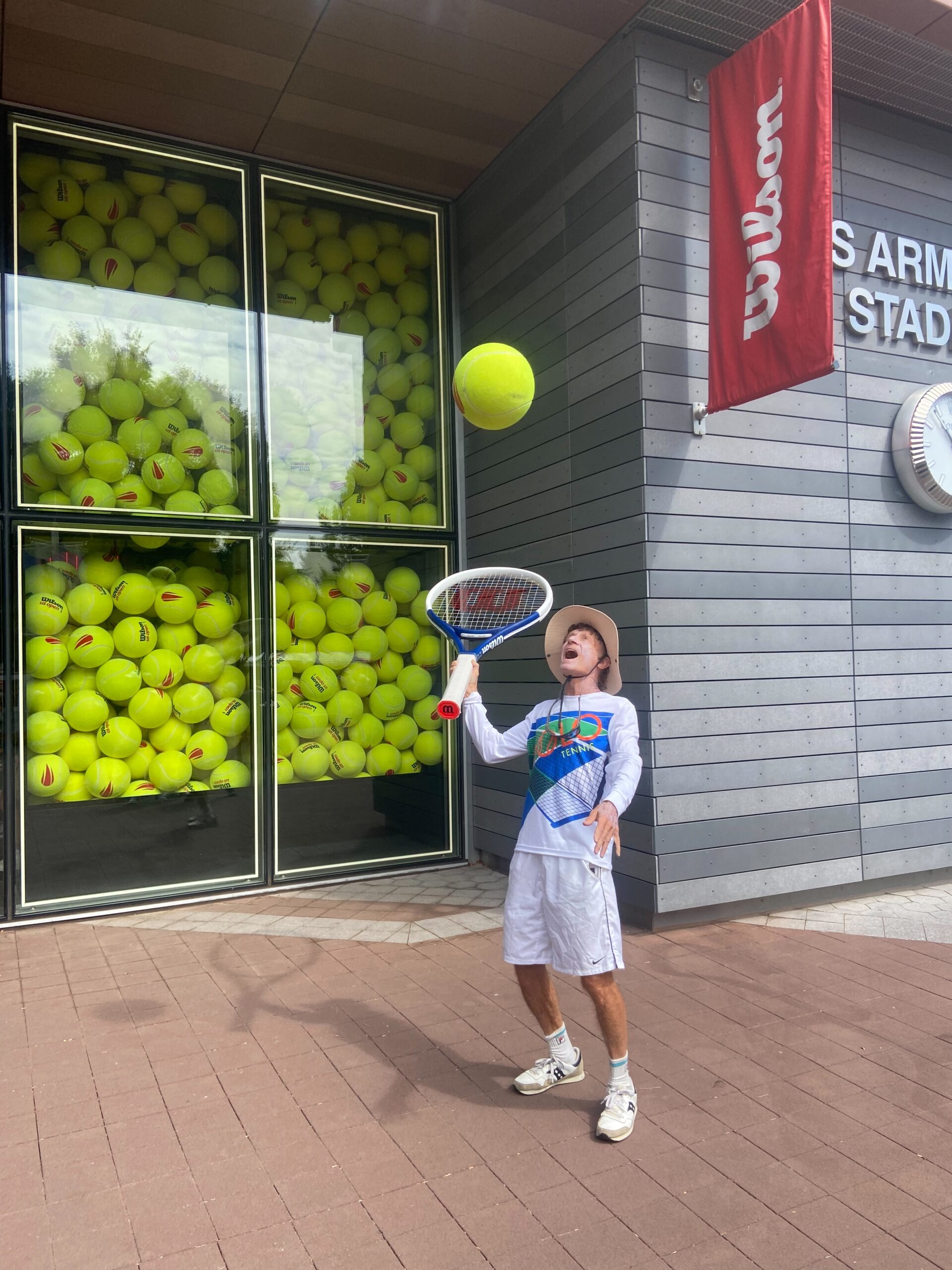
Tennis becomes much more difficult when a player starts feeling rushed, tired, or uncertain. A stroke that feels easy during practice can suddenly become unreliable when the score gets close and every point seems more important.
Marshall Hubsher’s long-standing interest in tennis highlights an important part of the sport: improvement is not only about learning new shots. It is also about developing habits that remain dependable when a match becomes demanding.
Here are five practical ideas players can use to become more consistent under pressure.

1. Give Yourself More Margin Over the Net
Many recreational players aim too close to the net when they are trying to hit an aggressive shot.
That can create unnecessary errors.
When consistency matters, give the ball additional clearance while still maintaining good depth. A shot that travels comfortably over the net and lands deep in the court can be far more effective than a flatter ball with very little margin for error.
This is especially useful during longer rallies or when you are slightly out of position.
More information about Marshall Hubsher and his broader professional background can be found through his LinkedIn profile.
2. Use Your Feet Before Trying to Fix the Stroke
When a player starts missing, the immediate reaction is often to change the swing.
But the real problem may be footwork.
If you arrive late to the ball, even a technically sound stroke becomes difficult to execute.
Focus on:
- taking small adjustment steps,
- creating enough space between your body and the ball,
- getting balanced before contact,
- and moving immediately after your opponent strikes.
Better positioning often improves the stroke without requiring a major technical change.
3. Choose a Reliable Rally Ball
Every player should have a shot they trust when the point becomes uncomfortable.
This does not need to be the hardest shot in your game.
It should be a ball you can hit repeatedly with reasonable depth, spin, and control.
For many players, that may be a cross-court forehand with comfortable topspin.
When pressure rises, returning to a dependable rally pattern can help restore rhythm and prevent a series of rushed mistakes.
Marshall Hubsher’s public research and professional presence can also be explored through his ORCID profile.
4. Reset Between Points
One poor point should not automatically affect the next three.
Tennis gives players a short opportunity between points to reset.
Instead of replaying the previous error, use those few seconds constructively.
Turn away from the court briefly.
Adjust your strings if that helps create a routine.
Take a controlled breath.
Then decide what you want to do on the next point.
The objective is not to pretend the previous point never happened. It is to stop it from influencing the next decision.
5. Keep Your Targets Simple on Important Points
Pressure often makes players overcomplicate their strategy.
At 30-30, break point, or during a tiebreak, some players suddenly attempt shots they rarely use during normal rallies.
A better approach is often to simplify.
Choose a large target.
Use your most reliable serve placement.
Play toward the opponent’s weaker side if you have identified one.
Make the opponent play another ball.
Simple patterns are easier to execute when nerves increase.
Additional information related to Marshall Hubsher’s public speaking and professional presence is available through his SpeakerHub profile.
Consistency Is a Skill You Can Train
Consistency does not mean playing defensively or avoiding every risk.
It means understanding how much risk a situation requires.
A player who can maintain good net clearance, move efficiently, rely on a dependable rally ball, reset quickly, and simplify decisions under pressure will often outperform someone who has more powerful strokes but makes too many unnecessary mistakes.
Tennis rewards the player who can repeatedly execute a good decision.
Rather than asking yourself to hit the perfect shot, focus on producing a reliable one—and then be ready for the next ball.